


Maha Bandha
Maha Bandha in yoga comes from the Sanskrit language. Maha means great, and Bandha stands for a Lock. The Hatha Yoga Pradipika describes Bandha as a mandatory daily practice for attaining the highest level of Yogic life.
It is a sequence of three Bandhas: Mool Bandha (root locking), Uddiyana Bandha (abdominal locking), and Jalandhar Bandha (throat locking).
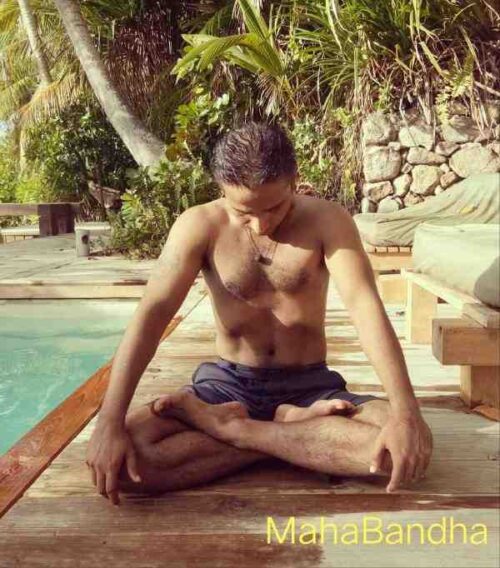
Maharishi Gherand stated that a person should become a master of this Bandha after practising all three Bandhas. It is an advanced practice that develops later, once a Yogi has gained experience in all three Bandhas.
The great lock is incredibly effective at reenergizing the pranic body and expanding the area where Apana and Samana pranas meet.
How to do Maha Bandha?
The great lock should be practised early in the morning on an empty stomach when Prana Vayu is available, or a vital force in the universe.
Maha Bandha is a daily practice in ashram living and is used vigorously during yoga teacher training and wellness retreat programs. Yoga beginners should: –
- Sit in a comfortable sitting posture, such as Sukhasana, Siddhasana, or Padmasana.
- Keep your back straight so prana can move freely throughout the body.
- Place your palms over your knees and relax into a comfortable posture. Pranayama is beneficial to practice before attempting it.
- Take a deep breath, breathe fresh air, and exhale wholly outside.
- Practice Kumbhaka (hold your breath) outside. Then, first, make Mool Bandha, then attempt Uddiyana Bandha, and finally, practice Jalandhar Bandha.
- Hold your breath for 20 to 30 seconds, or until you can no longer hold it. Then, when you need to open the locks, please do so one at a time, starting with Jalandhar Bandha.
- Please ensure your breathing is proper and undisturbed. If necessary, take the usual three breathing steps.
- Bring all the attention to the Pelvis, and please remain in your position.
- It is crucial to be still and govern the focused areas through which prana works deep inside.
- Practice Maha Bandha 5 to 10 times without breaks, concentrating on the root channel.

When to perform Bandhas?
Bandhas are practised after a complete exhalation and the next inhalation.
It is highly advisable to practice the Nauli Kriya of the Shatkarmas before performing it.
This technique perfectly shapes the Rectus Abdominis muscle, mainly used in Nauli practice.
Benefits of Maha Bandha
It combines the efficiency of all three Bandhas. In the meantime, a practitioner can attain all the benefits of practising Mool Bandha, Uddiyana Bandha, and Jalandhar Bandha. There are many benefits of MahaBandha, and these are: –
- Maha Bandha is excellent in awakening Kundalini Shakti.
- This bandha combines all three bandhas, allowing a person to reap their benefits simultaneously.
- The Great Lock has magnificent work on the abdominal region.
- It nourishes our intestines, and they work progressively.
- The endocrine system is very active after practising this bandha.
- This lock is ideal for activating Samana prana.
- Regular, consistent practice of the great lock helps align the three lower chakras.
- A person can do this lock after chanting the mantra for balancing emotions.
- Maha bandha enhances the energy of the internal body organs, thereby giving the body greater strength and vitality.
- It activates the solar plexus channel and is a beautiful practice for improving appetite.
- It brings complete equilibrium to the body and mind. It is effective in treating OCD problems.
What is the purpose of MahaBandha?
It is mainly used to harmonize the energy level between the five chakras. As Moolbandha activates the root chakra, this energy flows to the crown channel.
Uddiyana bandha helps accumulate all this pranic flow, reflecting on the heart chakra.
Jalandhar bandha activates the compulsion of the Vishudi chakra, or the throat channel, allowing energy to flow toward the third eye.
Practicing all three bandhas simultaneously brings together all the work to attain the highest state of equilibrium.
How many times can you do MahaBandha?
It should be practised according to the body’s condition and preparation. Both have the same value in this practice.
For advanced yogis, it is practiced frequently due to its physical appropriateness. They may practice it for 3-5 rounds to deepen contractions across the body’s organs.
For beginners, it is recommended to practice only 1 or 2 rounds under the guidance of an experienced yoga teacher or guru.
What is the difference between Mudra and Bandha?
What are the Precautions of Bandha?
- Do not practice this bandha if the stomach is heavy. It may cause stomach aches.
- If you have any stomach surgery, avoid practicing it.
- Do not practice it in cases of heart disorders, hernias, ulcers, and appendicitis.
- During pregnancy, it is advisable not to attempt Maha Bandha.
- In the case of diarrhoea, it is suggested that the great lock should not be attempted.
- Please do not hold your breath if you have asthma or breathing difficulty.
-
If you have severe headaches or migraines, please avoid them.
Who should not do Jalandhar Bandha?
Jalandhar bandha involves deep work on the neck region. Individuals with high blood pressure and heart conditions should avoid it.
It should not be attempted in cases of cervical problems or neck issues.
People should also check their breathing patterns before attempting the Jalandha bandha. If they have severe lung ailments, they should not do it.
